
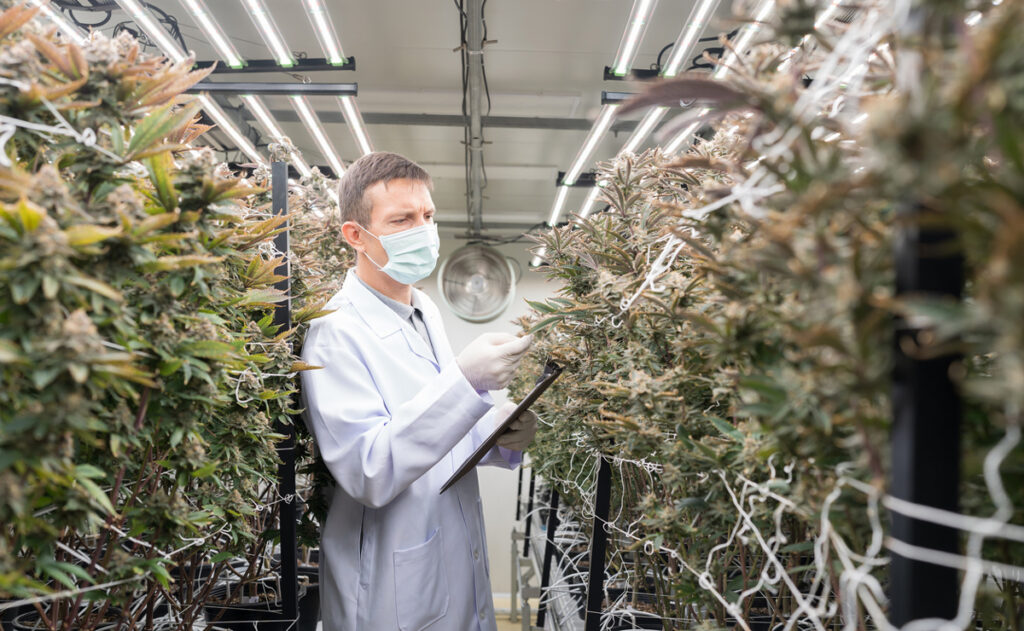
THE CANNABIS industry has a number of worker safety hazards that are unique to the industry, and operators need to protect their workers against those risks.
Cultivation, processing, extraction and retail all expose employees to hazards that are uncommon in other industries and increasingly visible to regulators. Operators should focus on identifying risks, controlling them and documenting compliance.
Cannabis businesses are subject to the same federal workplace safety laws as any other employer, even though marijuana remains illegal under federal law. The Occupational Safety and Health Administration expects operators to anticipate industry-specific hazards, train employees and implement controls that reduce injuries, illnesses and enforcement risk.
OSHA obligations
Cannabis employers are covered by the Occupational Safety and Health Act’s general duty clause, which requires a workplace free from recognized hazards likely to cause serious harm.
OSHA standards that routinely apply to cannabis operations include:
- Hazard communication,
- Electrical safety,
- Respiratory protection,
- Fire prevention and
- Personal protective equipment,
- Ergonomics.
Core hazards
Biological exposures: Mold, mildew and plant allergens can trigger respiratory symptoms. Trimming, grinding and pre- roll production generate fine dust that has been linked to work-related asthma.
Chemical hazards: Fertilizers and solvents can cause skin, eye and lung injury.
Fire risks: Dry plant material, ethanol or butane extraction processes and grow lights increase fire potential.
Physical and ergonomic strain: Repetitive trimming, prolonged standing and heavy lifting contribute to musculoskeletal injuries.
Electrical hazards: Indoor cultivation relies on intensive lighting and HVAC systems that can overload circuits if improperly installed or maintained.
Security-related risks: Cash-heavy operations and controlled products increase the risk of workplace violence or robbery, especially in retail settings.
Cannabis Safety Training Should Be Role-Specific
Practical controls
Engineering controls — These include local exhaust ventilation and HEPA filtration in high-dust areas, enclosed extraction systems, explosion-proof equipment, humidity controls to prevent mold and properly rated electrical infrastructure.
Administrative controls — These reduce exposure through policies and scheduling. Examples include job rotation in trimming rooms, strict chemical handling procedures, preventive maintenance programs and clear incident-reporting protocols.
Personal protective equipment — Gloves, eye protection, protective clothing and respirators must be selected based on the hazard and supported by training, medical clearance and fit-testing when required.
Training can’t be one-size-fits-all
Cannabis safety training should be role-specific.
- Cultivation staff need instruction on plant allergens, pesticide handling, electrical safety and humidity control.
- Extraction technicians require detailed training on solvent handling, ventilation, fire suppression and emergency response.
- Processing employees should receive dust control, ergonomics and respiratory hazard education.
- Retail workers need training on slips and falls, customer interactions and security procedures.
Supervisors should be trained to recognize early warning signs of illness or unsafe conditions and empowered to intervene.