
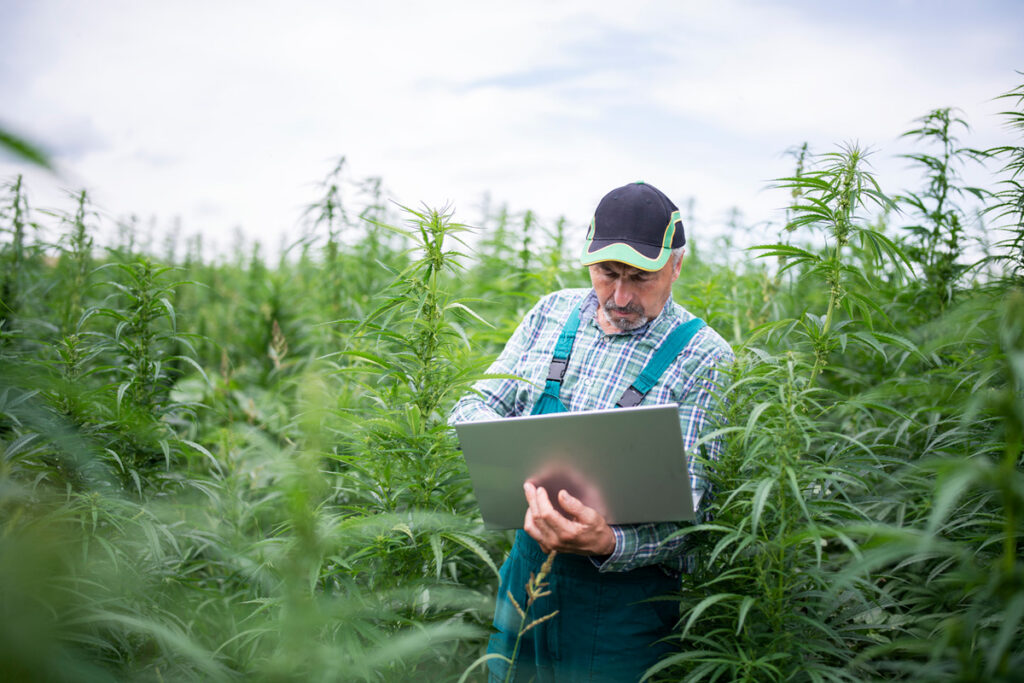
CANNABIS CULTIVATION is becoming more data-driven, automated and precise as new technologies move from experimental to standard practice.
The latest wave of cultivation technology is helping growers produce more uniform crops at lower cost while reducing risk from pests, disease and human error. Operators that integrate these tools effectively are gaining an edge in yield, quality and scalability.
AI and machine learning
Artificial intelligence is increasingly being used to monitor plant health and optimize grow conditions in real time. Systems analyze temperature, humidity, lighting and nutrient levels and can flag early signs of stress, disease or deficiency.
Some systems can compare current plant performance to historical data, helping growers fine-tune conditions and predict outcomes more accurately.
Automation across the facility
Today’s systems can manage nearly every stage of cultivation, from climate control and fertigation to trimming, drying and packaging.
Automated systems reduce manual tasks, limit human error and provide real-time visibility into operations. They also help with compliance by integrating tracking and reporting requirements into the workflow.
Sensor-driven precision growing
Advanced sensors are now central to indoor cultivation. They continuously monitor variables like CO2 levels, moisture, pH and nutrient concentrations, providing real-time feedback.
The advantage is early detection. Growers can address issues before they affect yield.
LED lighting advances
LED lighting continues to replace traditional HID systems, primarily due to energy efficiency and control. LEDs produce less heat, reducing
HVAC demand and allowing for tighter environmental control.
However, switching to LEDs requires recalibrating temperature, airflow and irrigation strategies to avoid unintended impacts.
Hydroponics and aeroponics
Soilless systems are gaining traction for their ability to boost growth and increase yields. By delivering nutrients directly to the root, these systems promote faster uptake and more controlled development.
They also reduce exposure to soil-borne pests and diseases. For commercial operators, the main benefit is efficiency — faster cycles, higher output and more predictable results in controlled environments.
Genetics and targeted breeding
Advances in genetics are allowing growers to move beyond trial- and-error strain development. Genetic mapping and marker-assisted selection help identify desirable traits early in the growth cycle.
Looking ahead, gene-editing tools such as CRISPR could further accelerate development of strains with specific cannabinoid profiles, pest resistance or environmental tolerance.
What it means for operators
Each of the above add value, but the real gains come from integration — tying data, automation and genetics into a cohesive system.
Operators that invest in these technologies can reduce costs, help them produce more consistent yield and differentiate their product.
Those that do not risk falling behind in a market where consistency and efficiency are becoming baseline expectations.